

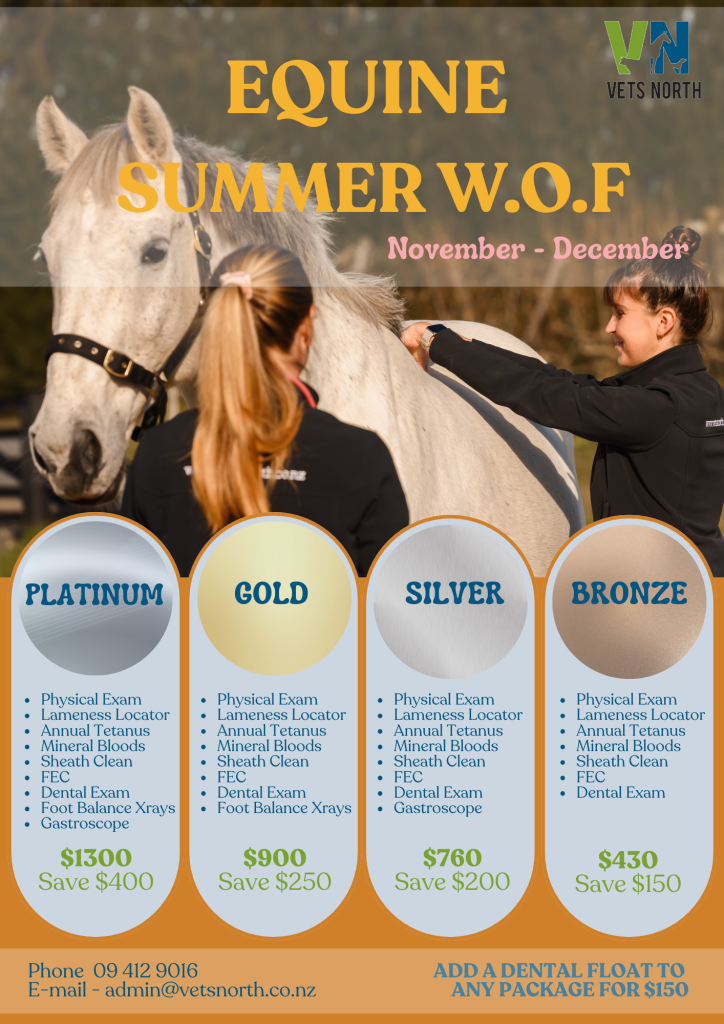
Why Summer is the Perfect Time for Your Horse’s W.O.F.
Just like your car needs a warrant of fitness, your horse does too — especially heading into the busy summer season! ☀️ Our Summer Equine W.O.F. checks are a full
Keep up to date with the latest news at Vets North!
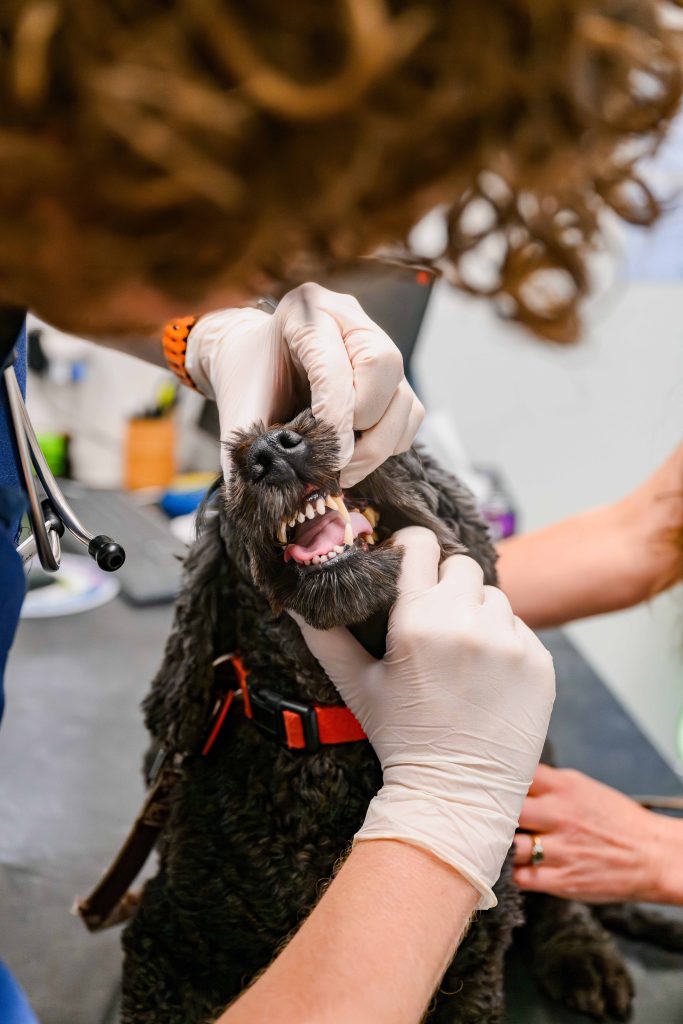
Most dental disease in dogs and cats develops quietly, long before owners notice anything wrong. Here’s what to look for, and when to book a check.
If your pet’s breath has been a little off lately, it’s tempting to write it off as normal. But persistent bad breath in dogs and cats is rarely just ‘pet breath’. It’s usually one of the first signs that dental disease is already taking hold.
Dental disease is one of the most common conditions vets treat in New Zealand, with around 80% of dogs and 70% of cats showing some form of it by the time they’re just two years old. And in most cases, owners don’t realise there’s a problem until it’s well advanced, because pets are instinctively good at hiding discomfort.
The good news: caught early, most dental disease is treatable. This guide covers the signs to watch for at home, what those signs might mean, and when it’s time to come and see us.
Your pet’s mouth is a window into their overall health. Untreated dental disease doesn’t just cause pain and tooth loss. Over time, bacteria from infected gums can enter the bloodstream and affect the heart, kidneys, and liver.
The challenge is that animals, particularly cats, are hardwired to mask pain and illness. A dog with significant periodontal disease may continue eating enthusiastically right up until the point where they can’t. By the time visible symptoms appear, disease is often well established.
Regular observation at home, combined with vet check-ups, is the most reliable way to catch problems early.
A mild, slightly ‘animal’ smell is normal. A persistent sour, rotten, or unusually strong odour is not.
Bad breath in pets is almost always caused by bacterial activity in the mouth: the byproduct of plaque and tartar build-up, or active infection in the gums or teeth. It’s one of the earliest and most reliable warning signs of dental disease, and one that’s easy to notice at home.
What to do: Trust your nose. If the smell has changed or worsened over time, book a dental check.
Healthy gums should be a consistent pale pink with a firm, smooth edge. Redness along the gumline, swelling, or gums that bleed when your pet chews or you gently press them are signs of gingivitis (gum inflammation).
Gingivitis is usually the precursor to periodontal disease. Caught at this stage, it’s often reversible with a professional clean and improved home care.
What to do: Lift your pet’s lip and take a look. If the gums look red, puffy, or darker than usual near the teeth, contact your vet.
Tartar is hardened plaque: a yellowy-brown or grey crust that accumulates on the tooth surface, particularly at the gumline and on the back teeth. Unlike soft plaque, tartar can’t be removed with brushing alone and requires a professional clean under anaesthesia.
Heavy tartar build-up is a sign that bacteria have had time to establish themselves, and that the disease process beneath the gumline may already be underway.
What to do: Check your pet’s back teeth (upper molars are a common site). If you can see brown or grey deposits, it’s time for a vet check.
Watch for any changes to how your pet eats:
These behaviours suggest mouth pain, and pain significant enough to change eating habits means dental disease is likely already at a moderate to advanced stage.
What to do: Any change in eating behaviour is worth a vet check. These things rarely resolve on their own.
Adult teeth should be firmly seated. Looseness, visible gaps, or a cracked or fractured tooth (often caused by chewing on bones or other hard objects) are all signs that need veterinary attention.
Some fractures are obvious; others cause no visible change but expose the internal tooth structure to bacteria and infection. Even a tooth that looks intact can be causing significant pain if the root is compromised.
What to do: Fractured or loose teeth always need assessment. Your vet will advise whether extraction or another treatment is appropriate.
Some dogs drool naturally. A sudden increase in drooling, or drooling in a pet that doesn’t normally do it, can signal mouth pain or nausea related to dental infection.
What to do: If drooling appears suddenly or has increased noticeably, mention it at your next vet visit, or book sooner if other signs are present.
A visible lump or swelling on the face, jaw, or under the eye can indicate a dental abscess: a pocket of infection at the tooth root that has spread into surrounding tissue. This is a more advanced presentation and needs prompt attention.
What to do: Facial swelling is an urgent sign. Contact your vet as soon as possible.
During a routine health check, your vet will examine your pet’s mouth, teeth, and gums. For many pets, this gives a useful baseline. A full picture often isn’t possible without dental X-rays and an examination under general anaesthesia, which allows for a thorough clean and assessment of what’s happening beneath the gumline.
Most dental treatment is carried out under anaesthesia. If this is recommended, your vet will explain the procedure, discuss your pet’s individual risk, and answer any questions you have before you decide.
Professional dental cleans treat existing disease. What keeps it from coming back is what happens between appointments.
The most common signs are bad breath, red or swollen gums, visible tartar, changes to eating behaviour, or pawing at the mouth. That said, many pets with significant dental disease show no obvious signs at all, which is why regular vet checks matter even when everything seems fine.
Yes. Eating normally is not a reliable indicator of dental health in pets. Many animals continue to eat through significant pain; it’s a survival instinct. The absence of obvious symptoms doesn’t mean the mouth is healthy.
From the start. Dental disease can begin in young animals, and the habits established early (including home brushing and regular check-ups) make a significant difference over a lifetime. If you have a puppy or kitten, ask your vet about dental care at your first appointment.
General anaesthesia is required for most dental treatment in pets; it’s the only way to do a thorough clean and assessment safely. We understand it can feel daunting, but for most healthy pets the risks are low and significantly outweighed by the benefits of treating dental disease. Your vet will assess your pet individually and explain exactly what’s involved before any procedure.
It varies depending on the individual pet, breed, age, and home care routine. Some pets need professional cleaning every year; others less frequently. Your vet will recommend an appropriate schedule based on your pet’s dental history.
Book a check and let us have a look. Our teams across Helensville, Kumeu, Waimauku, and Silverdale are happy to assess your pet’s dental health and advise on next steps.
If you’ve noticed any of the signs above, or just want to get a baseline on your pet’s dental health, our teams at Helensville, Kumeu, Waimauku, and Silverdale are here to help.
We serve pet owners across the northwest Auckland corridor, including lifestyle block owners, rural families, and urban pet owners in the growing Kumeu–Huapai–Riverhead area.
Contact your nearest Vets North clinic directly to make an appointment.
Vets North — Helensville | Kumeu | Waimauku | Silverdale | vets-north.co.nz
This article is for general informational purposes. Always consult your vet for advice specific to your pet’s health and history.
Just like your car needs a warrant of fitness, your horse does too — especially heading into the busy summer season! ☀️ Our Summer Equine W.O.F. checks are a full
New Kitten Care Checklist 🐾 Bringing home a new kitten is such an exciting time—and it’s completely normal to have questions. Those first few weeks are all about helping your