


FREE WEE IN JUNE
Complimentary urine testing for cats and dogs 7 years and older — with any appointment in June Why Test Urine? As pets age, subtle changes can happen long before you
Keep up to date with the latest news at Vets North!
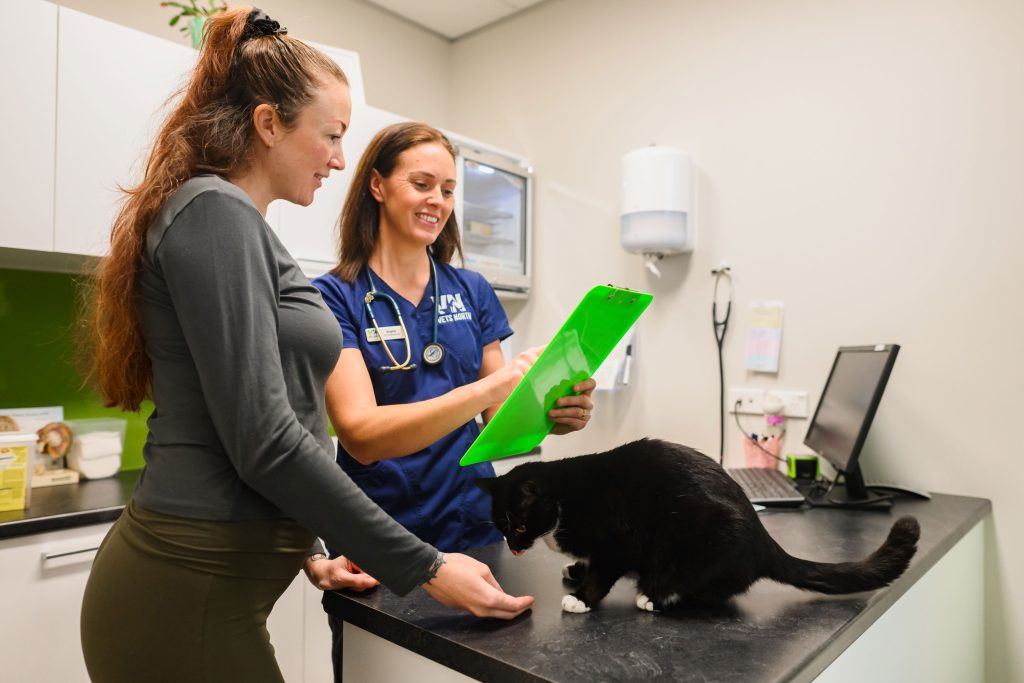
Everything you need to know about timing, health benefits, what the procedure involves, and what to expect at Vets North.
Desexing (also called spaying for females and neutering or castration for males) is one of the most common surgical procedures performed at veterinary clinics in New Zealand. It’s recommended for the vast majority of pet cats, and for good reason: the health, behavioural, and community benefits are well established.
But many cat owners aren’t sure exactly when to book the procedure, what it involves, or whether it’s the right choice for their cat. This guide covers all of it: the ideal age, what to expect on the day, the long-term health benefits, and what happens if you wait.
Desexing refers to the surgical removal of a cat’s reproductive organs. In female cats, this is called a spey (or ovariohysterectomy): the removal of the ovaries and uterus. In male cats, it’s called neutering or castration: the removal of both testes.
Both procedures are performed under general anaesthesia and are carried out routinely at all Vets North clinics. Your cat is monitored throughout and cared for during recovery before going home the same day.
The generally recommended window for desexing cats in New Zealand is around 4–6 months of age, before they reach sexual maturity.
Female cats can come into heat as early as four months old, and a cat in heat can become pregnant on her first cycle. Desexing before this point prevents an unwanted pregnancy, avoids the hormonal and behavioural changes associated with heat cycles, and is associated with a lower risk of mammary (breast) tumours later in life.
For male cats, desexing before sexual maturity helps prevent the development of testosterone-driven behaviours such as roaming, urine spraying, and fighting, all of which increase the risk of injury, infection, and getting lost.
That said, adult cats can be desexed at any age. If you’ve adopted an older cat or your cat wasn’t desexed as a kitten, it’s not too late. The health and behavioural benefits still apply.
| Life stage | Recommended timing | Notes |
| Female kittens | 4–6 months (before first heat) | Most vets recommend desexing before the first heat cycle |
| Male kittens | 4–6 months | Earlier desexing reduces roaming and marking behaviours |
| Adult female cats | Any time — ideally between heat cycles | Reduces surgical complexity and anaesthetic risk |
| Adult male cats | Any time | Benefits are greatest when done early, but still significant in adults |
| Cats from shelters | May be desexed from 8 weeks | Early desexing is widely practised in shelter settings |
If you’re unsure about timing for your specific cat, our vets are happy to advise. Bring your kitten in for a health check from 8 weeks of age and we’ll confirm when they’ll be ready for the procedure.
New Zealand has a serious problem with feral and stray cat populations. Each undesexed female cat can produce two to three litters per year, with four to six kittens per litter. Over time, the numbers compound rapidly, contributing to significant pressure on native wildlife and on rescue and rehoming organisations.
Desexing your cat is one of the simplest and most meaningful things you can do to help.
Desexing is a day procedure. Your cat will come in for surgery in the morning and go home the same afternoon or evening, once they’ve recovered from anaesthesia.
Here is what to expect:
| 🩺 What Happens at a Desexing Appointment at Vets North?
Every desexing appointment includes a pre-operative health check. Our vets will: • Examine your cat to confirm they’re fit and well for general anaesthesia • Review their health history and discuss any specific considerations for your cat • Answer any questions about the procedure, recovery, and aftercare • Provide clear written instructions for caring for your cat at home • Schedule a follow-up check to confirm healing is on track
Think of it as a full health check with surgery included, not just a quick procedure. |
Desexing will not change your cat’s fundamental personality. Their affectionate nature, playfulness, and individual quirks remain the same.
What does change are the behaviours driven by reproductive hormones: yowling during heat cycles, urine spraying, roaming, and aggression toward other cats. Most cat owners find these changes very welcome.
One thing to be aware of: desexed cats can be more prone to weight gain because their metabolic rate decreases slightly after surgery. This is easy to manage with appropriate portion control and, if needed, a weight-management diet. Our team can advise on feeding recommendations at your post-operative check.
General anaesthesia is required for desexing, and we understand it can feel daunting, especially for new cat owners. The good news is that for healthy young cats, the procedure is very safe, and the protocols we use at Vets North are designed to keep it that way.
We use a carefully chosen combination of injectable and gas anaesthesia for cat desexings. Female cats have an endotracheal tube placed to protect their airway during surgery. This allows us to deliver supplemental oxygen and anaesthetic gas as needed, and importantly protects against aspiration while your cat is under. After surgery, we reverse one of the main anaesthetic agents to speed recovery. Most cats are awake, comfortable, and ready for a small meal within one to two hours of their surgery completing.
Throughout the procedure, a dedicated vet nurse monitors your cat continuously, from the moment they go under anaesthetic through to full recovery. We track blood pressure, body temperature, heart rate, respiratory rate, and blood oxygenation in real time.
Female cats receive a minimum of four days of pain relief as standard, in line with the World Small Animal Veterinary Association (WSAVA) guidelines on pain management for cat speys. This is worth noting if you’re comparing costs between clinics: many low-cost providers send cats home with a single injection lasting 36–48 hours. We believe appropriate post-operative pain relief is a non-negotiable part of the procedure, not an optional extra.
The risks of leaving a female cat undesexed (including pyometra, mammary tumours, and the complications of pregnancy) far outweigh the small risks associated with a well-managed anaesthetic in a healthy cat.
Before any anaesthetic procedure, we strongly recommend pre-anaesthetic blood testing for all cats. This isn’t a formality. It gives us critical information about your cat’s internal health that a physical examination alone can’t provide, and allows us to tailor the anaesthetic protocol to their individual needs.
A pre-anaesthetic blood panel typically checks:
Pre-anaesthetic blood testing is particularly valuable because many cats are very good at masking signs of illness. A cat that appears perfectly well may have an underlying condition that would meaningfully change how we approach their anaesthetic. Identifying this in advance is always safer than discovering it during surgery.
Normal blood test results are something to be celebrated. They confirm that your cat has normal major organ function and, alongside a normal clinical examination, indicate they are very low risk for anaesthesia. These results also serve as a highly valuable reference point in the future if your cat becomes unwell. ‘Normal’ is not a single number but a range, and knowing where your cat sits within that range is genuinely helpful when assessing any abnormalities in later bloodwork.
Our team will discuss the benefits of pre-anaesthetic blood testing for your cat when you book and/or at your cat’s admission appointment. You’re also welcome to ask us about the details if you have any questions.
This is a common question, and it’s understandable. It can feel like your cat is missing out. But the evidence doesn’t support the idea that having a litter before desexing provides any health benefit. In fact, the opposite is true: each heat cycle your cat experiences before being spayed increases the risk of mammary tumours later in life.
The kindest thing for your cat, and for the broader cat population, is to desex before the first heat if at all possible.
What is the best age to desex a cat in NZ?
Most vets in New Zealand recommend desexing at around 4–6 months of age, before cats reach sexual maturity. Female cats can come into heat from as early as four months old, so acting before this point prevents unwanted pregnancies and reduces the risk of mammary tumours. Male cats benefit from desexing before testosterone-driven behaviours like spraying and roaming become established. Adult cats can be desexed at any age.
How much does it cost to desex a cat in NZ?
Desexing costs vary between clinics, and it’s worth understanding what goes into the price. The procedure requires general anaesthesia, which means trained staff dedicated to monitoring your cat throughout, specialist equipment tracking blood pressure, heart rate, body temperature, and blood oxygenation, and the medications needed to keep your cat safe and comfortable before, during, and after surgery.
At Vets North, female cats receive a minimum of four days of post-operative pain relief as per WSAVA guidelines, the international benchmark for pain management in cat speys. Many low-cost clinics provide a single injection lasting 36–48 hours. We use a combination of injectable and gas anaesthesia with airway protection for female cats, and reverse the main anaesthetic agent after surgery to speed recovery. The time your cat spends in our care, from pre-operative assessment through to recovery, is part of what you’re paying for.
We provide a significant discount on all desexing procedures as a community service, because we believe keeping the cost of desexing accessible matters for reducing the rate of unwanted litters in our community. Contact your nearest clinic for a quote — our team is happy to walk you through what’s included.
Is it safe to desex a cat?
Yes. Desexing is one of the most commonly performed procedures in veterinary medicine and is considered very safe for healthy cats. All patients receive a pre-operative health check and are monitored throughout surgery and recovery. The risks of leaving a female cat undesexed (including pyometra, mammary tumours, and pregnancy-related complications) significantly outweigh the small risks of a routine anaesthetic.
Can I desex my cat if they are already in heat?
It is technically possible to desex a cat in heat, but most vets will recommend waiting until the heat cycle has passed if it is safe to do so. The uterus is more engorged during heat, which can increase surgical complexity. Your vet will assess your cat’s individual situation and advise accordingly.
Will desexing stop my male cat from spraying?
In most cases, yes, particularly if the cat is desexed before the behaviour becomes established. Neutering removes the primary hormonal driver of urine spraying, and the majority of male cats stop or significantly reduce spraying after the procedure. Cats that have been spraying for a long time before desexing may take longer to change, and in some cases the behaviour may persist if it has become habitual rather than hormonal.
Will my cat gain weight after being desexed?
Desexed cats have a slightly lower metabolic rate than undesexed cats, which means they can be more prone to weight gain if their food intake isn’t adjusted. This is manageable with portion control and, where needed, a weight-management diet. Our team will talk you through feeding recommendations at your post-operative check.
Can I desex a pregnant cat?
Yes, a pregnant cat can be desexed. The decision is one to discuss with your vet, who will take into account the stage of pregnancy and your cat’s overall health. Early in pregnancy, the procedure is more straightforward. If your cat is already heavily pregnant, your vet will discuss the options with you.
Do indoor cats need to be desexed?
Yes. Even cats kept entirely indoors can escape, and an undesexed cat that gets outside, even briefly, can become pregnant or sire a litter. The health benefits of desexing also apply regardless of whether a cat goes outdoors: reduced cancer risk, no heat cycles, and prevention of pyometra apply to all female cats.
Whether you have a new kitten approaching the recommended age, or an adult cat that hasn’t been desexed, our teams across Helensville, Kumeu, Waimauku and Silverdale are here to help.
We’ll carry out a full health check before the procedure, walk you through what to expect, and make sure your cat comes home comfortable and well cared for.
Contact your nearest Vets North clinic to book an appointment. Desexing is one of the best things you can do for your cat’s long-term health, and for the cats in your community who need homes.
Vets North | Helensville | Kumeu | Waimauku | Silverdale | vets-north.co.nz
This article is for general informational purposes. Always consult your vet for advice specific to your cat’s health and history.
Complimentary urine testing for cats and dogs 7 years and older — with any appointment in June Why Test Urine? As pets age, subtle changes can happen long before you

We all want our pets to live long, happy and comfortable lives — and good dental health is an important part of that. Unfortunately, dental disease is one of the