Blog

Keep up to date with the latest news at Vets North!

Equine Dentals at Vets North: Complete Horse Dental Care

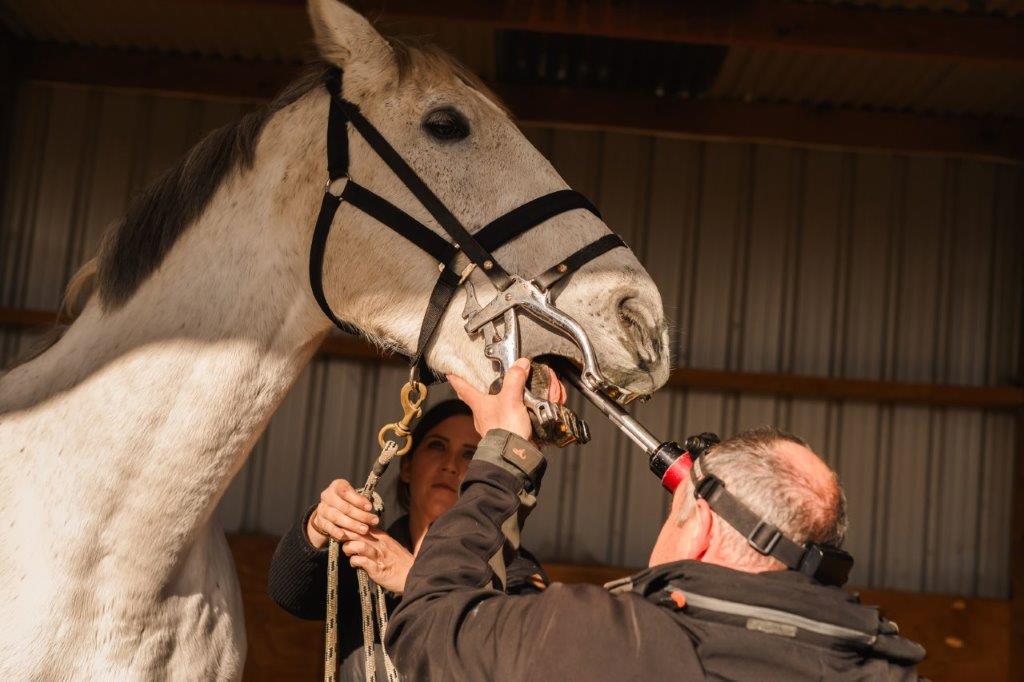
Vets North Equine Dental Procedure

Regular equine dental care is essential for keeping your horse comfortable, healthy, and performing at their best.

Because horses’ teeth continually erupt throughout their lives, uneven wear can quickly create sharp enamel points, mouth ulcers, difficulty chewing, weight loss, and behavioural resistance under saddle. Routine horse dental examinations allow us to identify and correct problems early — before they impact your horse’s wellbeing.

At Vets North, our experienced equine team provides comprehensive equine dentals, tailored to each individual horse.


Who Performs Equine Dentals at Vets North?

We’ve recently had enquiries asking whether only one veterinarian performs non-sedated equine dentals.

All of our equine veterinarians are trained and experienced in providing equine dental services. Every member of our equine team can perform:

  • Routine equine dental examinations
  • Horse teeth floating (filing sharp enamel points)
  • Sedated equine dentals
  • Non-sedated equine dentals (where appropriate)
  • Dental x-rays
  • Extractions
  • Management of complex equine dental disease

Your horse’s safety, comfort, and long-term dental health are always our priority.


Sedated or Non-Sedated Equine Dentals?

One of the most common questions we receive is whether equine dentals should be performed with sedation.

The answer depends on the individual horse and the procedure required.

Sedation may be recommended because it:

  • Improves safety for both horse and veterinarian
  • Allows a more thorough and accurate oral examination
  • Reduces stress for the horse
  • Enables treatment of more complex dental issues

However, some routine horse teeth floating procedures can be safely completed without sedation.

We assess each horse individually and will discuss the most appropriate approach with you before proceeding.


What Happens During a Horse Dental Examination?

A routine equine dental check typically includes:

  • A full oral examination using appropriate equipment
  • Assessment of bite alignment and wear patterns
  • Identification of sharp enamel points
  • Checking for ulcers, gum disease, loose or fractured teeth
  • Correction of abnormalities through floating

In some cases, further diagnostics such as equine dental x-rays may be recommended to investigate underlying issues.

Dental discomfort is not always obvious. Signs that your horse may need a dental check include:

  • Dropping feed
  • Slow eating
  • Head tossing
  • Resistance under saddle
  • Unexplained weight loss
  • Changes in behaviour

If you notice any of these signs, it may be time to book an examination.


Supporting the Equine Community

With the recent retirement of equine dentist Amanda Winstanley, we understand that some horse owners may be looking for ongoing equine dental care.

Our equine veterinary team is here to provide continuity of care and professional support for your horse’s dental health.


How Often Should Horses Have Equine Dentals?

Most horses benefit from a dental examination at least once every 12 months.

Young horses, senior horses, and those with known dental abnormalities may require more frequent checks.

If you are unsure when your horse last had a dental examination, our team is happy to advise.


Book an Equine Dental Appointment

Good dental health plays a significant role in your horse’s comfort, performance, and overall wellbeing.

To book an equine dental appointment, contact Vets North today. Our team can discuss sedation options, answer your questions, and schedule a suitable time for your horse’s dental examination.


Other articles:

Feeding guide for ruminants

Ensuring the health and well-being of your young ruminants starts with proper feeding practices. Here’s a comprehensive guide to help you get started: Colostrum: The First Essential Feed All ruminants

Read More »

Fireworks and Anxiety

It’s that time of the year again when the fizz pop bang of fireworks can be a source of joy for many humans, but a source of fear and anxiety

Read More »